Project: primary school in Syria, Idlib

By Projekt

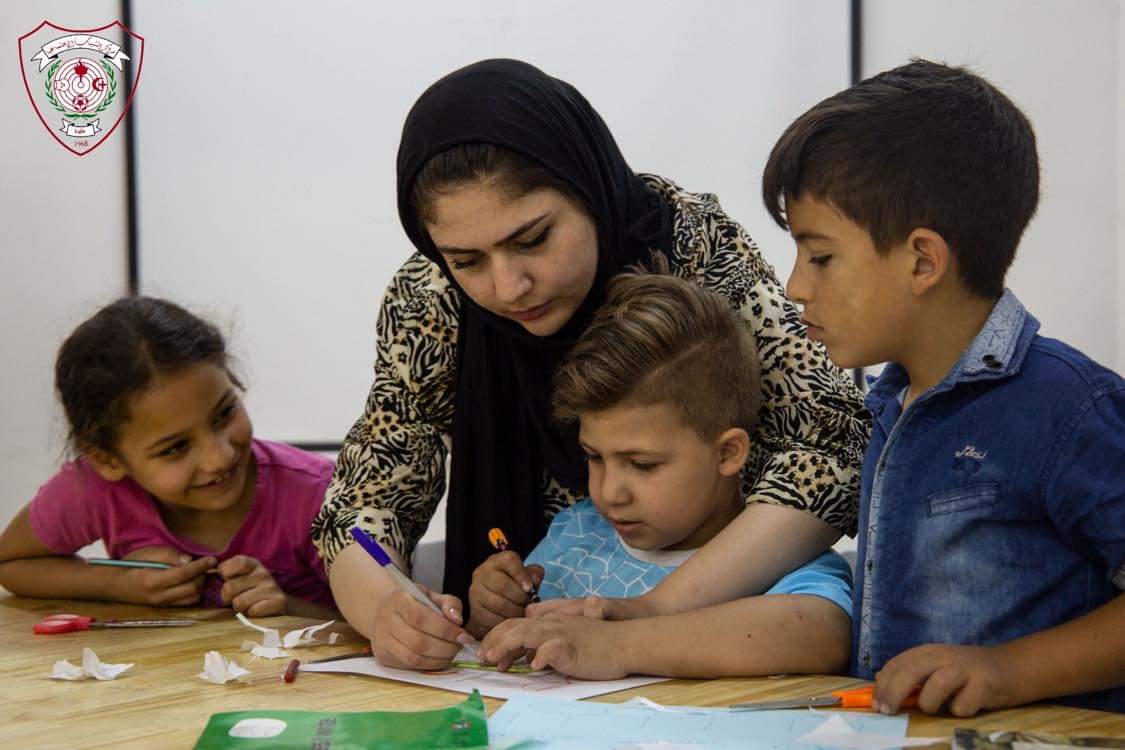
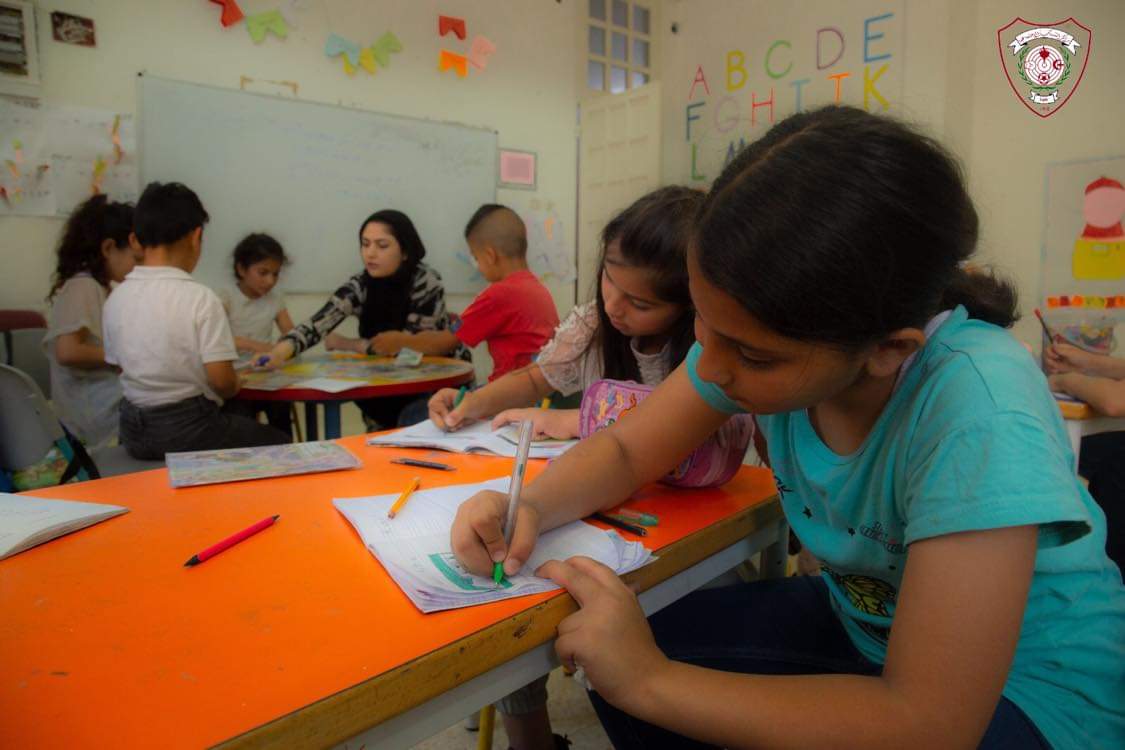
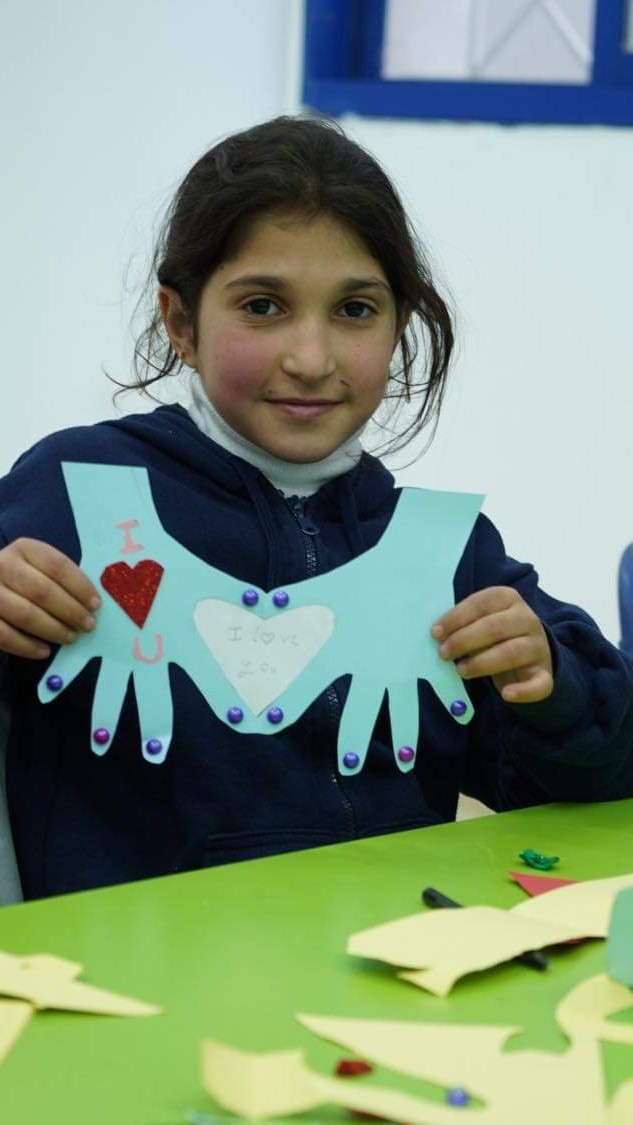
It is a small room with crumbling plaster. School desks are pushed close together. You see an improvised teacher’s desk and a white chalkboard nailed badly to the wall. There are children with smiles all over their faces because they have a colorful learning booklet laying in front of them. This is what it looks like in Shahla’s school. Shahla is 38, teacher and educator and full of passion for her job. She loves the children who are sitting in front of her in the classroom. Everything in here is improvised. Because there is no school building anymore in this part of Idlib, in the north west of Syria, Shahla rented this room in a residential building. Some time ago, she was able to build a second hand swing that she put in the patio of the building. You can tell how much it means to her to bring at least one game device to the children. Around 60 children come to Shahla’s school in two groups. She gets support by her 15 years old daughter Halaa. The children sit close to each other to make space for everyone. They learn to calculate, write Arabic and English letters, sing songs together and are happy to receive a testimony at the end of the school year.
The children are mostly orphans and half orphans. Many of them are traumatized. They have no other option to find a safe space to learn, play and grow but in school. They need it as a place of refuge.

Some time ago Shahla texted us, she would need to close the school. She just could not afford the money anymore after three years of leading the school. Her private savings are all gone because she supported the school with it. She could not see any possibility to buy pens, folders or paper. She cannot pay the rent since her husband died in the war. But Shahla keeps on fighting as she knows the children will end up on the street if the school closes.
We support Shahla to buy things that are urgently needed and to pay the rent to make sure the children will also go to school in the future as it is so important to them.
Project country: Syria

By Uncategorized

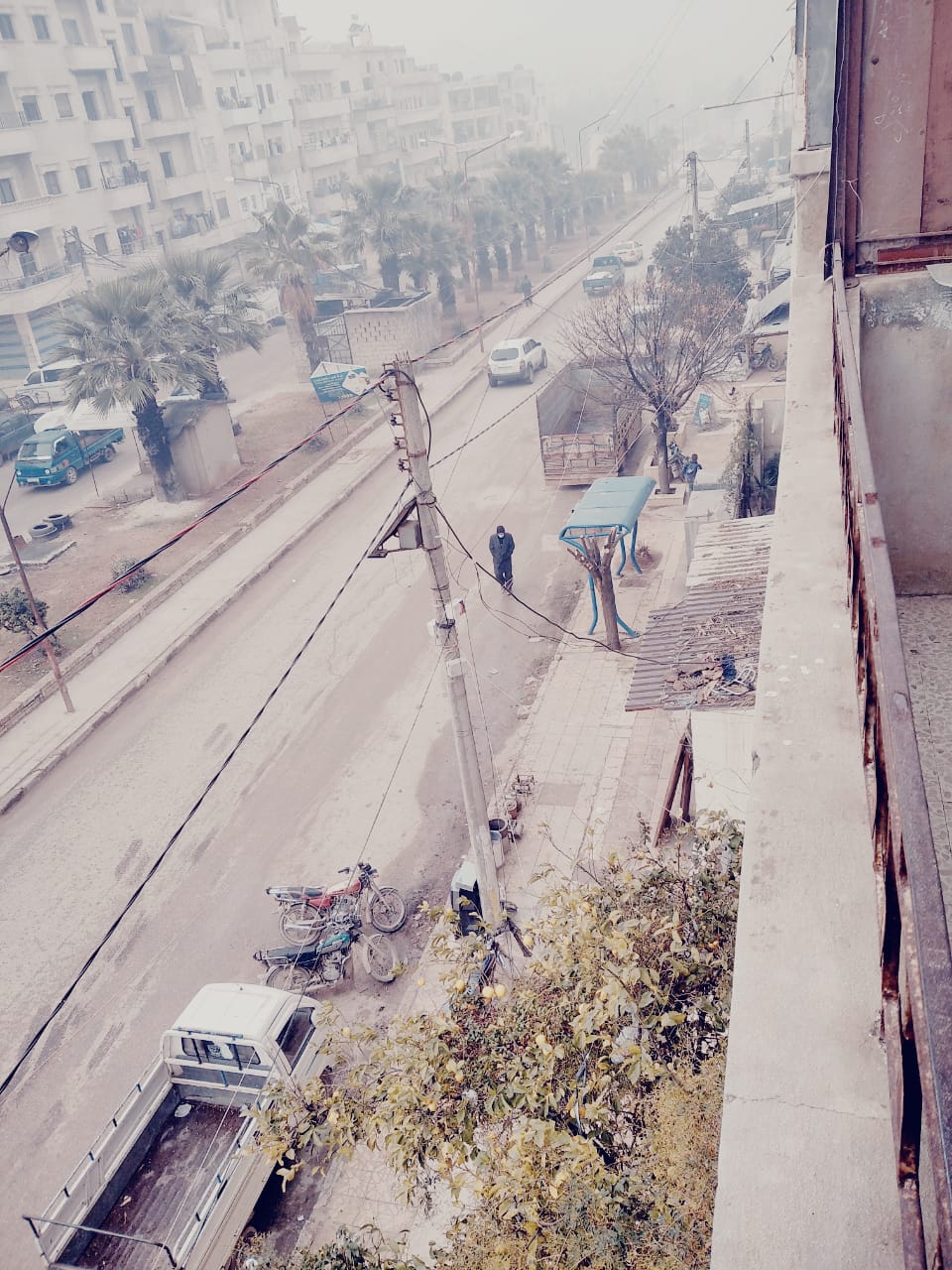
Children in Syria have not known anything but living in a war country. They grow up in an unsecure environment, always facing fear and sorrow. The political situation changes repeatedly and the power relations are instable. Nobody is able to say how the future in the next weeks, months or years is going to look like for children but also adults. Even though the fighting gets less, Syria is not a country where a carefree childhood is possible.
Since more than ten years rig attacks and poison gas attacks are part of everyday life. Buildings and streets are destroyed; countless people lost their lives or their loved ones. In the middle of this civil war, the children are the ones suffering the most. Many children still do not have enough food. A lot of people face trauma and fight with the experiences of the past. To spend enough time with the children and to care for them appropriately is often impossible. The meaning of playing and free time fades into the background. Children have to grow up too fast and help the adults in the everyday life. Also children often cannot go to school what is especially dramatic for the Syrian boy’s and girl’s perspective for the future.

Project country: Occupied Palestinian Territory

By Uncategorized

The starting conditions for Palestinian children living in the Occupied Palestinian Territories are challenging in various ways: the collective and ongoing experience of forcible displacement, the daily presence of Israeli occupation and the inefficiency of their own “government”. Also, the environment is not stimulating at all. For example, there are hardly any sidewalks, hardly any green spaces, no or hardly any playgrounds, rubbish on the street, uncertified age-inappropriate plastic toys, etc. These poor living conditions are accompanied by the omnipresence of the separation wall, which stretches 700km through the West Bank, 100 different Israeli checkpoints, illegal Israeli settlements, etc. This and much more makes it impossible to escape reality. Often the experienced powerlessness to change something in one’s own living conditions is reflected in problems within Palestinian families such as a high rate of domestic violence and violent disciplinary methods used on children. Particularly girls suffer additionally from the gender role imposed by the patriarchal society.

Despite the frustrating reality, there are always people who come together with the goal to improve the local children’s life situation in various ways.

Project: Aida Youth Center, Bethlehem

By Projekt

The Aida Youth Center is located in the center of Aida refugee camp in Bethlehem. The camp is the home of more than 5,500 Palestinians, which became officially recognized as refugees by the UN in 1948. This means they passed over the status as a refugee to the third or even fourth generation. The growing population is located on an area of less than 0,071km2. Besides these conditions the camp is directly located next to the Israeli separation wall, an Israeli military base and seven watchtowers. A study of Human Right Watch Center in California revealed that the Aida community are the most exposed people to tear gas attacks all over the world (https://humanrights.berkeley.edu/programs-projects/no-safe-space). People in the camp struggle from water scarcity, insufficient infrastructure, and poverty.

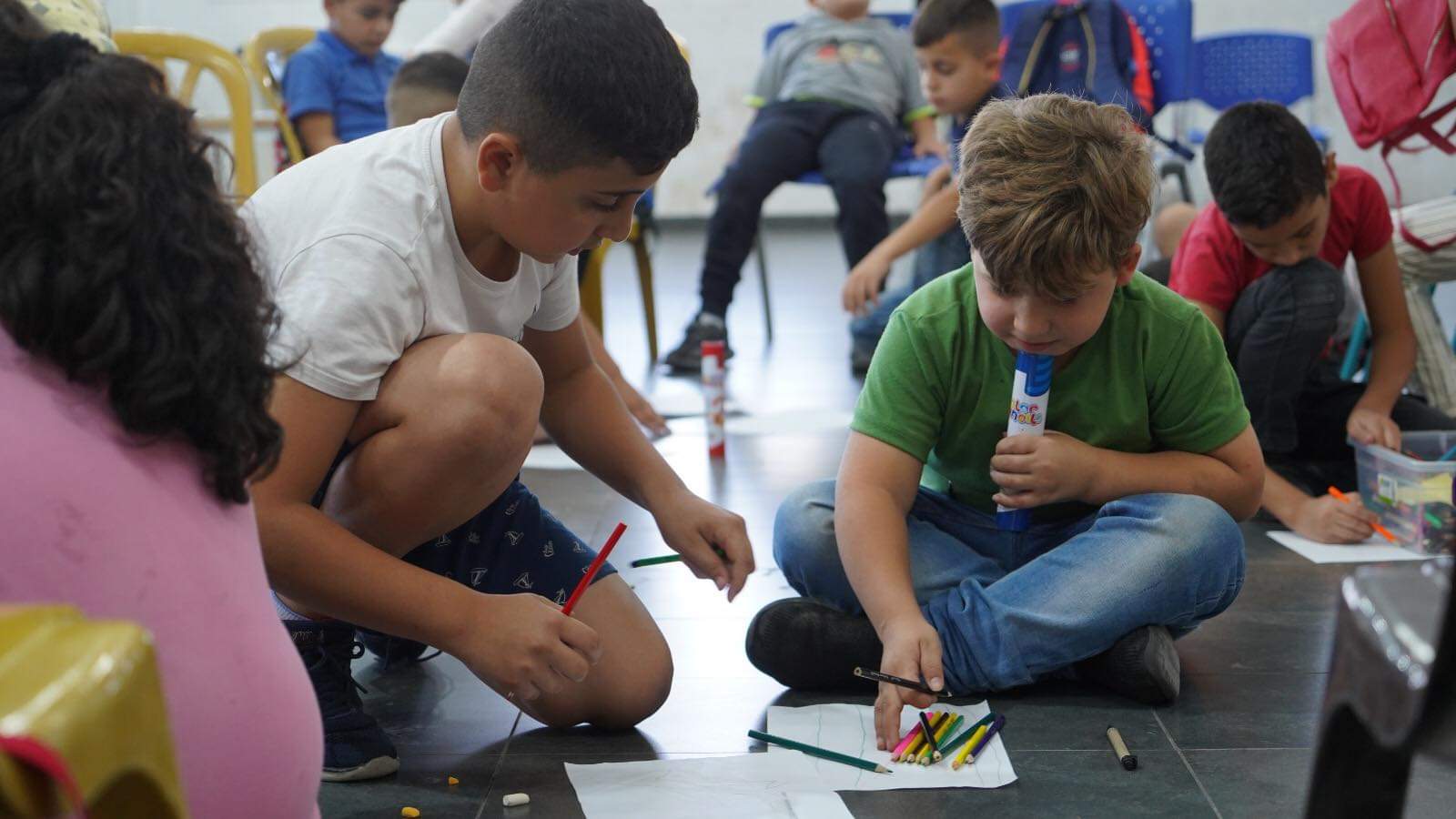
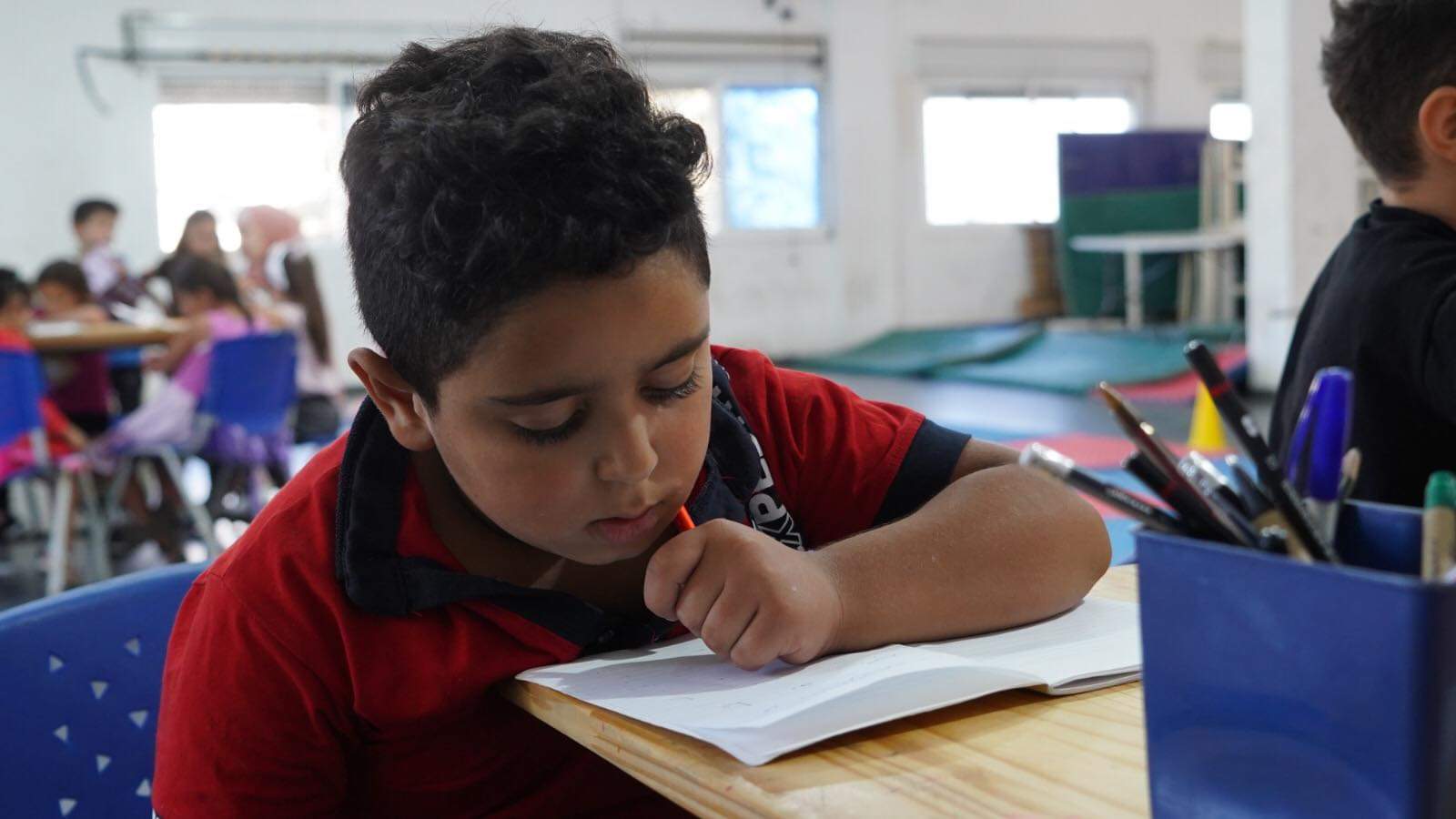
More than half of the Aida refugee community are children facing these conditions daily without almost no alternatives. Being aware of this, the Aida community organized themselves and founded the Aida Youth Center, mostly maintained with the help of local and international volunteers. Besides formal education offers like lessons for Arabic, Mathematics or English in the afternoon, there are also informal education offers. The children can for example draw their own comics; they learn to play an instrument, playing theater or just come to hang around with other minors. Currently the youth center is working on opening a science lab for children. In the lab the local children are getting the opportunity independent or guided to facilitate experiments.

Experiments improve creativity, helps to understand scientific contexts and sets the base of holistic education. Children are getting the possibility to learn with all senses. Convinced of this idea we would like to support the Aida Youth center in the implementation of the science lab. For this, equipment is needed such as test tubes, microscopy, loupes, colours etc. According to the raised fund we will be able to add more items.